
Savage Lifestyle System

The Comfort Paradox
In an age defined by convenience, comfort has quietly become a liability. The human body evolved under pressure — walking long distances, lifting, climbing, grappling, carrying, and adapting.
However, modern life has removed most of those demands. Climate control shields us from environmental stress. Food arrives without effort. Work has become increasingly cognitive rather than physical. As a result, we face a paradox: we are more comfortable than ever, yet less capable than previous generations.
Energy declines earlier in life. Meanwhile, posture deteriorates. Over time, stress tolerance drops and chronic pain becomes normalized. For many people, fitness has shifted into either a cosmetic pursuit or an inconsistent hobby instead of a life foundation. Savage was created in response to this modern fragility.


What Savage Really Is
Savage is not a workout. Nor is it a diet trend. It is not a motivational slogan either.
Instead, it is a structured lifestyle system built on four integrated pillars: purposeful physical training, structured nutrition, intelligent recovery, and mental conditioning.
Its objective is clear — restore real-world human capability. Not aesthetics alone. Not seasonal performance. Rather, strength, resilience, and durability that compound across decades.

Why Most Fitness Programs Fail
Most mainstream programs isolate components. For example, a strength plan often ignores mobility. Similarly, a cardio plan neglects muscular development. In the same way, a diet plan overlooks hormonal balance, while mindset courses frequently ignore physiology.
The human body, however, is not modular. Instead, it operates as an interconnected biological system governed by neural efficiency, endocrine signaling, tissue adaptation, and psychological state. Therefore, when training fails to reflect integration, results plateau and injuries emerge. Savage is built around that integration.

The Power of Compound Movement & Neural Strength
Savage prioritizes compound, multi-joint, multi-plane movements:
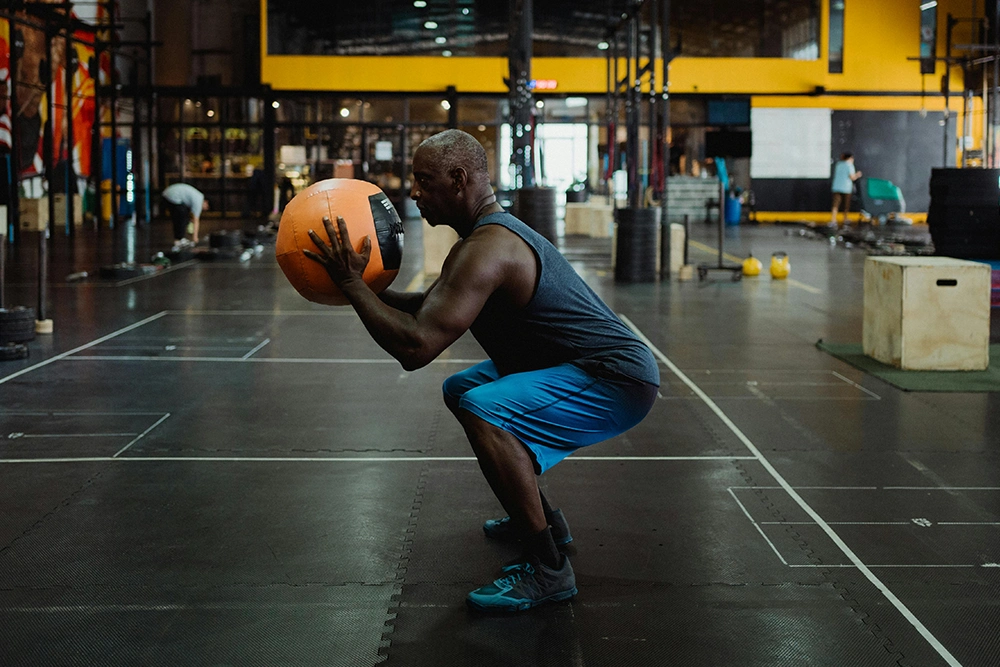
Hinge. Squat. Push. Pull. Rotate. Carry. Sprint. Stabilize. Rather than isolating muscles on machines, it develops movement patterns that mirror real-world demands.
Compound movement:
- Increases motor unit recruitment
- Improves neuromuscular coordination
- Stimulates higher systemic hormonal response
- Improves insulin sensitivity
- Increases mitochondrial density
Strength is not muscle size alone.
It is neural efficiency — the ability to recruit force under load with control and stability.

Why 40 Minutes Works
Equally important is time structure. Savage sessions are intentionally concise, typically around forty minutes. This is not arbitrary. In fact, behavioral psychology shows that consistency correlates more strongly with habit duration than with intensity spikes. A manageable daily commitment builds identity-level change.
From a metabolic perspective, short high-intensity sessions elevate post-exercise oxygen consumption. Consequently, caloric expenditure remains elevated even after the session ends, while muscle mass is preserved. Unlike excessive steady-state cardio, which may reduce muscle and slow metabolism, Savage balances resistance and conditioning to maintain metabolic rate.

Structured Nutrition & Metabolic Flexibility
Extreme dieting disrupts hormonal stability.
Savage promotes structured fueling:
- Adequate protein for muscle repair
- Controlled carbohydrates for performance
- Sufficient fats for hormonal health
This supports metabolic flexibility — the body’s ability to efficiently switch between fat and carbohydrate utilization. No crash dieting. No metabolic suppression. Just sustainable body composition change.


Recovery: The Overlooked Advantage
Modern culture glorifies exhaustion. However, adaptation occurs during recovery, not during stress. Without sufficient sleep, parasympathetic activation declines. As cortisol rises, testosterone drops. Eventually, injury risk increases and performance deteriorates.
For this reason, Savage treats recovery as non-negotiable. Sleep optimization, mobility work, and stress regulation are built into the system.

Mental Conditioning & Resilience
Beyond physiology, the psychological dimension is equally significant. Exposure to controlled stress enhances resilience. Research in psychophysiology shows that voluntary stress exposure improves stress tolerance outside physical training. Over time, the body regulates heart rate variability more efficiently. Meanwhile, the mind learns to remain composed under discomfort. Through deliberate friction, Savage builds confidence that extends beyond the gym.


Longevity, Identity & Decades of Durability
Not a short-term transformation program.
It is measured in:
- Moving freely at fifty
- Remaining strong at sixty
- Staying independent at seventy
Muscular strength correlates strongly with longevity. Grip strength predicts mortality.
Muscle mass protects against metabolic disease.
But beyond physiology, Savage reshapes identity. When someone identifies as strong and capable, behavior aligns accordingly. Community strengthens this effect. Shared exertion builds bonds, cohesion, and adherence.



 Savage is a functional fitness system built to restore strength, conditioning, recovery, and resilience for modern life.